


Sep 21, 2026

Meet Maya. She is a composite of a thousand real candidates: an ICU nurse with six years of experience, quietly open to the right move, exactly the person your job posting says you are looking for. She applied to a hospital very much like yours. Here is what happened next, day by day, and where she was lost, because ghosting almost never happens at the end of a process. It happens in the middle, silently, and the end is just when you notice.
She spends forty minutes on your application portal, re-typing the resume she already attached, creating a password she will never use again. She does it anyway, because the role looks right.
The fix at this step: every field you require is a toll, and the best candidates, the employed ones with options, pay the least tolerance for tolls. If your application takes longer than fifteen minutes, you are pre-filtering for the people with the most time on their hands, which is rarely the shortlist you want.
No acknowledgment beyond the auto-reply. Maya has no idea if a human saw anything. Meanwhile, a recruiter from another system messages her back within a day.
The fix: speed of first touch is the cheapest competitive advantage in hiring, and it is measured in days, not weeks. You do not need an interview scheduled by day four. You need a human sentence: we saw you, here is what happens next, here is when.
A pleasant call. The recruiter cannot answer Maya's questions about shift differentials, patient ratios, or the manager, and promises the hiring manager will cover all that. A second call is promised "soon."
The fix: first-line screeners who cannot discuss the specifics clinicians care about turn every screen into a delay with a smile. Arm them with real answers, especially on pay, because we found when digging into what healthcare professionals want in 2026 that transparency ranks near the top of every list, and its absence reads as a warning.
Eight days to schedule one conversation. The interview itself goes well. The manager is impressive, the unit seems solid, Maya leaves genuinely interested. She is told they are "finishing up with a few other candidates" and will be in touch.
The fix: this is the peak of the process, and everything after it is decay. Interest has a half-life. Every silent day after a good interview transfers momentum to whoever else is talking to her, and someone else is always talking to her. If you cannot decide within a week, communicate within a week anyway.
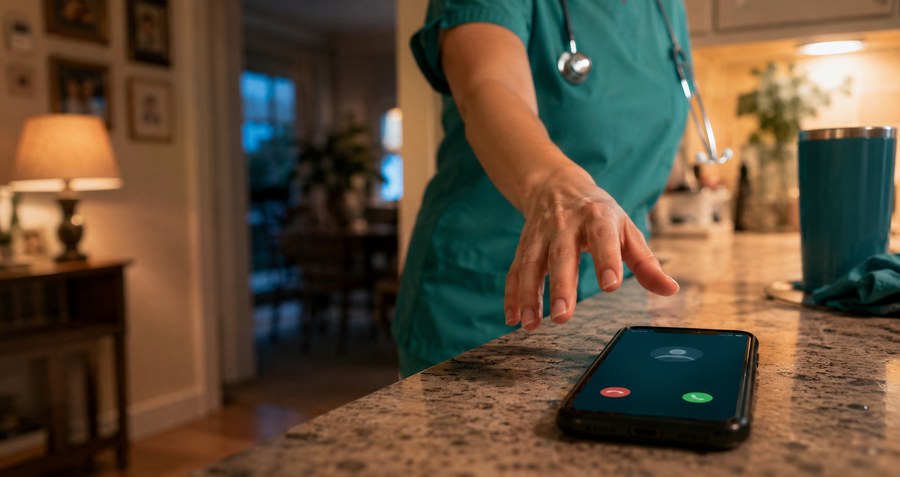
Two more weeks pass while approvals crawl through HR. The offer letter finally goes out, competitive and sincere. Maya never responds. The team is baffled. She ghosted. Candidates these days.
Except Maya did not vanish on day 33. She left somewhere around day 22, when a competing employer took her from interview to offer in nine days, and told her things about the unit your process never got around to. Your offer was not rejected. It arrived at an empty address.
It is worth saying directly: some ghosting is just rudeness, and healthcare has its share. But when strong candidates consistently evaporate mid-process, the pattern is not a character flaw in an entire labor market. It is your process, measured honestly. We put numbers to the damage in how long hiring processes cost healthcare organizations top talent, and the companion cost, panic-hiring whoever remains at day 60, is how organizations end up paying the price of a bad hire on top of the vacancy.
The audit is simple and uncomfortable. Take your last five successful hires and count the days from application to offer. Then count the touchpoints where the candidate heard nothing for more than five business days. Every one of those silences is where your next Maya is deciding.
There is also a structural answer. Most ghosting risk comes from chasing people who never signaled real interest in you specifically: job board applicants spraying resumes, passive names from a database. ProfiHitch inverts that. Employers see anonymous, verified profiles of clinicians who are actively looking, matched on skills and what they want from a workplace, and conversations only begin when both sides opt in. A candidate who chose to reveal herself to you has already answered the question most processes spend three weeks fumbling toward.
See how ProfiHitch works for employers. Mutual interest from message one, and a process built to move at the speed your best candidates already do.

Whether you're an employer seeking top-tier healthcare professionals or a job seeker looking for the perfect role, ProfiHitch offers a discreet, modern solution to meet your needs.
Copyright © 2026 ProfiHitch. All rights reserved.