


Jul 15, 2026
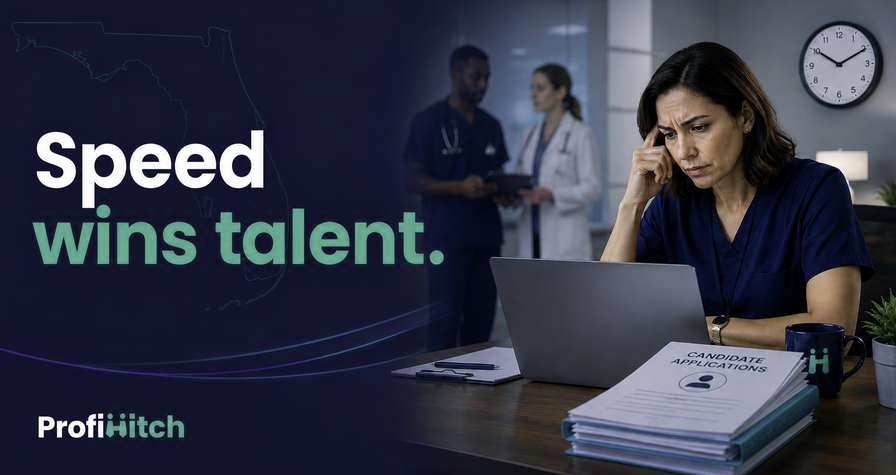
In today’s healthcare hiring market, speed matters more than ever.
Healthcare organizations across the country are competing for a limited pool of qualified professionals while simultaneously managing staffing shortages, burnout, patient demand, and rising turnover rates. Yet despite the urgency many employers face, lengthy hiring processes continue costing organizations some of the industry’s best candidates.
The reality is simple: healthcare professionals are no longer waiting around for slow-moving employers.
Top candidates often receive multiple opportunities at once, and organizations with delayed hiring timelines risk losing highly qualified nurses, therapists, physicians, behavioral health professionals, and allied healthcare workers before offers are ever extended.
For healthcare employers, the consequences go far beyond a missed hire. Slow hiring processes can increase operational strain, worsen burnout among existing staff, reduce patient satisfaction, and create significant financial costs.
So why are healthcare hiring timelines still so long, and what can organizations do to improve them? Let’s take a closer look.
Healthcare recruitment has become significantly more challenging over the past several years.
Organizations are facing:
At the same time, healthcare professionals themselves are becoming more selective about where they choose to work. Today’s clinicians are evaluating:
This means healthcare employers are no longer competing solely on compensation. They are competing on overall candidate experience, and hiring speed has become a major part of that equation.
Many healthcare organizations unintentionally lose qualified candidates because of hiring delays that occur throughout the recruitment process.
Common delays often include:
While each delay may seem minor individually, together they can significantly impact hiring outcomes. And in today’s market, highly qualified healthcare professionals often move quickly.
The most in-demand healthcare professionals are frequently interviewing with multiple organizations simultaneously.
This is especially true for:
When hiring timelines stretch for weeks without clear communication, candidates often interpret the delay as:
As a result, many candidates accept competing offers before slower employers can complete the hiring process.
Every unfilled healthcare role creates operational and financial strain. Vacancies often lead to:
For rehabilitation departments specifically, open PT, OT, or SLP positions can quickly impact patient scheduling and continuity of care.
For nursing teams, staffing shortages may increase nurse-to-patient ratios and place additional stress on already overworked staff.
The longer positions remain open, the more expensive those vacancies often become.
One of the biggest hidden consequences of delayed hiring is the increased pressure placed on existing employees.
When organizations remain understaffed for extended periods:
This can create a dangerous cycle:
Without efficient hiring systems in place, organizations may unintentionally contribute to worsening retention problems.
Healthcare professionals today expect hiring experiences that are:
Unfortunately, many organizations still rely on outdated hiring workflows that create frustration for candidates. Common candidate complaints include:
In competitive healthcare markets, these frustrations can push candidates toward employers offering smoother and faster experiences. Candidate experience itself has now become a major recruitment differentiator.
What Faster Healthcare Hiring Actually Looks Like
Improving hiring speed does not mean rushing decisions irresponsibly. Instead, it means removing unnecessary friction throughout the recruitment process.
Organizations improving recruitment efficiency often focus on:
Physical therapists, occupational therapists, speech-language pathologists, PTAs, and COTAs are increasingly selective about opportunities due to:
When hiring timelines become too slow, rehab candidates often move on quickly to organizations offering:
Healthcare employers looking to strengthen rehab staffing should pay especially close attention to hiring efficiency.
Healthcare hiring technology is evolving rapidly as organizations look for ways to improve recruitment outcomes and reduce time-to-hire.
Traditional recruiting models often create inefficiencies through:
Modern healthcare recruitment platforms are increasingly focused on creating more intentional matches between employers and candidates.
ProfiHitch helps simplify healthcare hiring by connecting healthcare organizations with qualified professionals through skill-based and preference-based matching.
Rather than relying solely on traditional application systems, the platform helps employers identify candidates who align with role requirements, experience levels, workplace preferences, and long-term fit.
For healthcare employers, this can help reduce hiring friction while improving candidate quality and engagement.
Organizations looking to compete more effectively for healthcare talent in 2026 should focus on several key areas:
The healthcare hiring landscape has changed dramatically. Organizations that continue relying on slow, outdated hiring workflows may find themselves struggling to compete for top clinicians, therapists, nurses, and allied healthcare professionals.
Meanwhile, healthcare employers prioritizing efficient hiring processes, better communication, candidate experience, recruitment technology, and workplace transparency are increasingly gaining an advantage in today’s competitive market.
Hiring speed alone is not enough, but unnecessary delays can absolutely cost organizations highly qualified healthcare talent.
Healthcare staffing challenges are unlikely to disappear anytime soon, making recruitment efficiency more important than ever.
Long hiring processes not only create operational strain and financial costs, but also risk pushing qualified healthcare professionals toward faster-moving competitors.
For healthcare organizations looking to strengthen staffing, improve retention, and reduce burnout, optimizing the hiring process has become a critical priority.
The organizations that adapt now will likely be better positioned to attract top healthcare talent and build stronger teams heading into the future.
Looking to streamline your healthcare hiring process and connect with qualified professionals more efficiently? Explore how ProfiHitch helps healthcare employers create faster, smarter, and more meaningful hiring matches.

Whether you're an employer seeking top-tier healthcare professionals or a job seeker looking for the perfect role, ProfiHitch offers a discreet, modern solution to meet your needs.
Copyright © 2026 ProfiHitch. All rights reserved.