


Nov 16, 2026
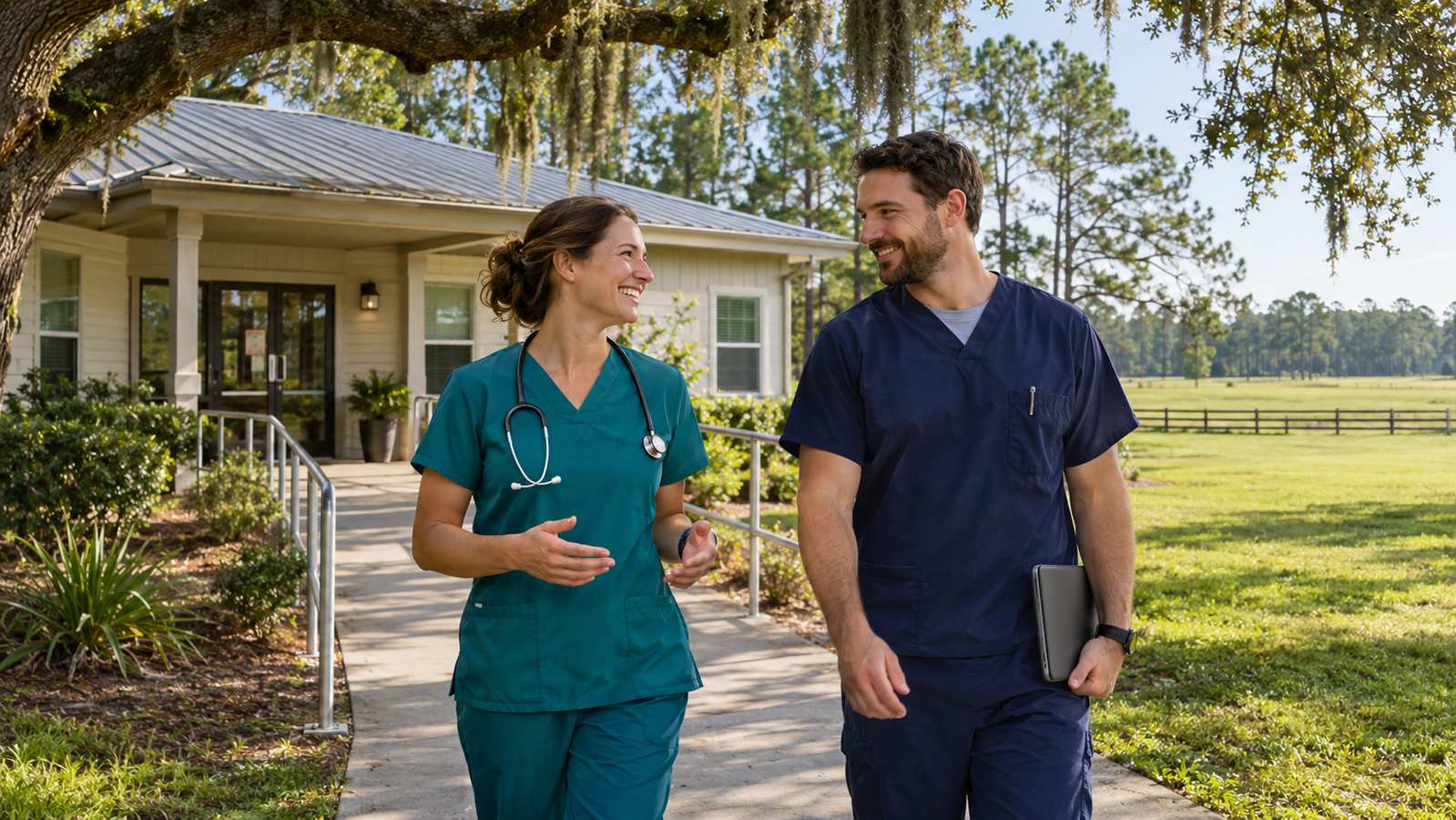
When people picture healthcare jobs in Florida, they picture Miami, Tampa, and Orlando. But a large part of the state looks nothing like that. The Florida Department of Health lists 33 rural counties, from Liberty and Lafayette in the Big Bend to Hendry and Hardee in the Heartland to the Florida Keys. National Rural Health Day is Thursday, November 19, which makes this a good week to look at what rural healthcare jobs in Florida offer and who they suit.
Florida defines a rural county as one with 75,000 or fewer residents, or up to 125,000 when it borders one of those smaller counties. The rural counties cluster in three areas:
Outside Florida's urban areas, HRSA data compiled by the Rural Health Information Hub counts 12 Critical Access Hospitals, 149 Rural Health Clinics, and 107 Federally Qualified Health Center sites. Those are the backbone employers, along with nursing homes, home health agencies, schools, and county health departments. If you're comparing regions statewide, our 2026 Florida healthcare job market guide covers the metro side.
Shortages show up in federal designations. As of December 31, 2025, Florida had 320 primary care, 283 dental, and 239 mental health Health Professional Shortage Area designations, based on HRSA figures compiled by KFF. Nationally, HRSA projects that nonmetro areas will face a much larger registered nurse shortage than metro areas, 24 percent versus 5 percent in 2028, according to its nursing workforce projections.
This is where rural and underserved work can pay off in a way many clinicians don't expect. Three programs are worth knowing:
To be fair about the limits: none of these programs cover CNAs, medical assistants, or most technician roles. For LPNs and nurses, though, the math can be significant.
Rural work isn't for everyone. Facilities are farther apart, so you may drive more and have fewer employers to choose from if a job doesn't work out. Specialty tracks can be thinner, and you'll often be one of a small team. Clinicians who choose it tend to value the other side of that: knowing their patients by name, a broad range of work, lower living costs, and a community that notices when they show up. If you value independence, home health and hospice work is another way into rural care, since it brings the job to patients who live far from a facility.
You can explore rural opportunities before deciding anything. On ProfiHitch, your Match Score weighs your certifications, skills, and experience against each role along with your shift preferences and location, so widen your location preferences to include the counties you'd consider. Both sides stay anonymous until you opt in, and you can block your current employer. Create your free profile and see what's out there beyond the interstate.

Whether you're an employer seeking top-tier healthcare professionals or a job seeker looking for the perfect role, ProfiHitch offers a discreet, modern solution to meet your needs.
Copyright © 2026 ProfiHitch. All rights reserved.