


May 08, 2026
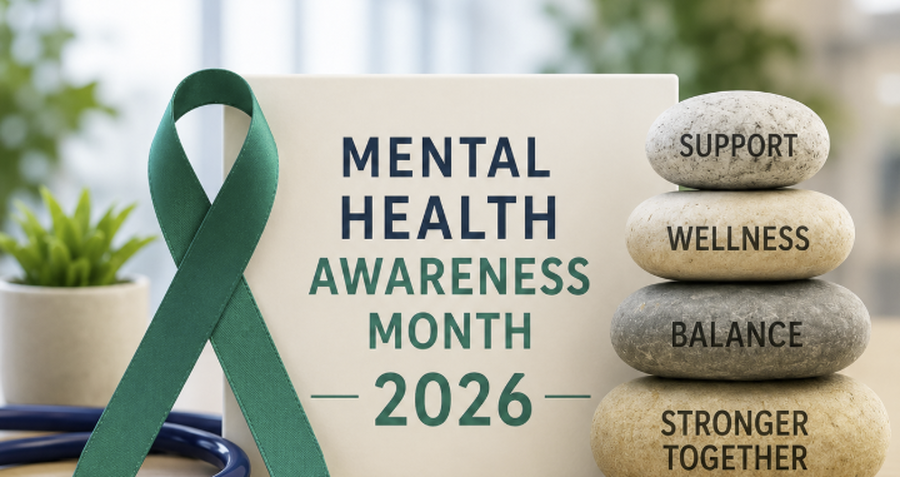
Every May, Mental Health Awareness Month gives us a collective moment to slow down and check in. On ourselves. On our teams. On the systems and structures that shape how people show up to work every single day.
Mental Health America founded Mental Health Awareness Month back in 1949, and this year's theme, "More Good Days, Together," invites individuals and organizations alike to reflect on what a good day actually looks like and to use that insight to connect people to the right support at the right time.
For healthcare employers, that invitation carries some extra weight. The professionals on your team spend their days caring for others through illness, injury, and some of life's most difficult moments. What is being done to make sure they're supported through their own?
This month is a good time to find out. And more importantly, to do something about it.
Looking at the numbers, healthcare workers are under real pressure, and the data in 2026 makes that clear.
Mercer's Inside Employees' Minds 2026 report found that only 58% of healthcare workers say they feel energized at work, compared with 67% across all other industries. Only 61% say the workload their organization expects of them is reasonable.
According to the CDC, 46% of health workers reported feeling burned out often or very often in 2022, compared to just 32% in 2018, a dramatic increase that predates and outlasts the acute pressures of the pandemic.
And the cost of inaction is significant. Burnout-related productivity losses and turnover cost organizations $322 billion annually, while absenteeism rates are three times higher in employees with mental health conditions than those with physical health conditions.
The good news is that the research is equally clear on what works. Employees who feel their mental health is supported at work are twice as likely to report no burnout or depression. The path forward for healthcare employers isn't complicated in theory. It just requires genuine commitment in practice.
Before building a support strategy, it helps to understand what healthcare workers are telling us they need. The answers might be more straightforward than you'd expect.
When clinicians across all roles were asked what would most improve their experience at work, the top five priorities were consistent: better compensation, support to deliver high-quality patient care, a more manageable workload, flexible work arrangements, and more clinically focused job responsibilities.
38% of healthcare workers say that more time off would most benefit their mental wellbeing and reduce burnout, a significantly higher share than the average of 29% across all other industries (Mercer).
These aren't unreasonable asks. They're the building blocks of a sustainable, supportive workplace. And for employers willing to invest in them, the returns in retention, engagement, and care quality are well documented.
Hanging a poster in the break room and offering a free EAP that nobody knows about isn't a mental health strategy. Here's what actually moves the needle.
The best mental health initiatives in healthcare don't start in a boardroom. They start with frontline staff. Leading employers are routinely assessing and addressing clinician wellbeing, measuring it consistently and providing access to mental health support at both the individual and group level. Regular, confidential surveys and open feedback channels give employers real data to act on, and they signal to staff that their experience genuinely matters.
Yoga Tuesdays and mindfulness apps have their place, but they won't solve a staffing problem. Research shows that health workers who trusted their management, had supervisor support, had enough time to complete their work, and felt their workplace supported productivity all experienced significantly lower odds of burnout. Addressing workload, staffing ratios, and scheduling before layering on wellness perks is the more sustainable approach.
Only 79% of healthcare workers say they are even able to take the time off they are owed (Mercer). That stat deserves a second read. Paid time off that exists only on paper does nothing for wellbeing. Employers who actively encourage rest, build adequate coverage into their staffing models, and normalize taking breaks are investing in the long-term sustainability of their teams.
Despite growing awareness, stigma around mental health remains a significant barrier, with many employees still feeling hesitant to seek support through employer-provided channels. Leadership plays a direct role in changing that culture. Forward-thinking health systems have found success by asking leaders to destigmatize mental health discussions by openly sharing their own experiences, creating permission for everyone else to do the same.
This one often gets overlooked: a significant driver of poor mental health at work is being in the wrong role. When professionals feel misaligned with their employer's values, overwhelmed by a patient population that doesn't match their skill set, or stuck without a path forward, it compounds everything else. Companies offering structured wellbeing programs, which includes helping employees find roles that fit, see 25 to 40% lower turnover rates driven by stronger engagement and retention.
Here's something worth sitting with: a lot of the mental health struggles healthcare workers experience begin with a poor job match. When a clinician takes a role that doesn't align with their values, their preferred schedule, or their patient care philosophy, the resulting stress compounds quickly. And when employers fill positions reactively rather than intentionally, they often end up with staff who are one difficult quarter away from burnout and departure.
That's one of the reasons the way healthcare hiring works matters so much for mental health outcomes. ProfiHitch was built around the idea that better matches lead to better experiences for both sides. By connecting clinicians with employers based on skills, values, and preferences before a conversation even starts, the platform helps reduce the kind of misalignment that quietly erodes wellbeing over time.
For healthcare employers who genuinely care about supporting their teams mentally and emotionally, building that foundation at the point of hire is one of the smartest places to start.
Mental Health America's 2026 theme encourages all of us to reflect on what a good day looks like and to use that insight to shape advocacy, education, and community engagement in ways that make more good days possible for everyone.
For healthcare employers, a good day for your team looks like reasonable patient loads, a manager who checks in with genuine interest, a schedule that leaves room for life, and a culture where asking for help doesn't feel like a risk. Those aren't luxuries. They're the conditions under which great healthcare professionals do their best work and choose to stay.
This Mental Health Awareness Month, the most meaningful thing a healthcare organization can do is take an honest look at whether their people are truly supported. And then take one real step toward making it better.
Looking to build a team that's set up for long-term success? Explore how ProfiHitch connects healthcare employers with pre-verified, values-aligned talent so both sides of the match can thrive.

Whether you're an employer seeking top-tier healthcare professionals or a job seeker looking for the perfect role, ProfiHitch offers a discreet, modern solution to meet your needs.
Copyright © 2026 ProfiHitch. All rights reserved.